Landscape through Glass: a train-window experiment
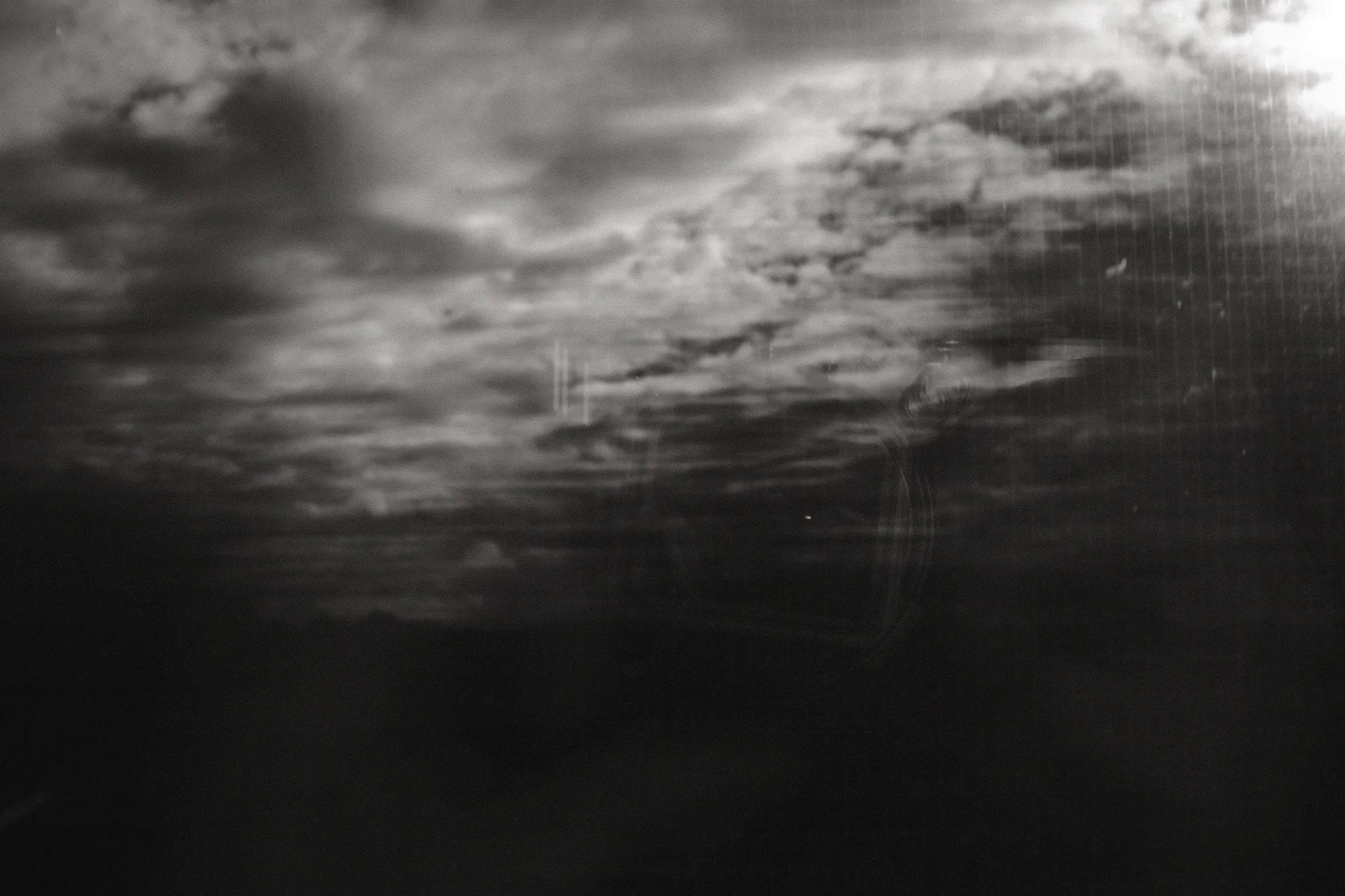
A slow-shutter test caught the landscape, Mark’s reflection and the camera in one frame.
A test on the train
“This was me testing slow shutter on the train and getting something more.” Mark’s account begins with an experiment. He describes the different distances in the landscape, his hands and lens reflected in the window, and his eyes above the camera. He connects the picture with childhood, memory, decay and a fading dream.
The upper part of the photograph is pale with clouds; the lower land is darker and streaked. The reflection is faint. It takes a moment to find the person holding the camera among the outside shapes.
Movement at different distances
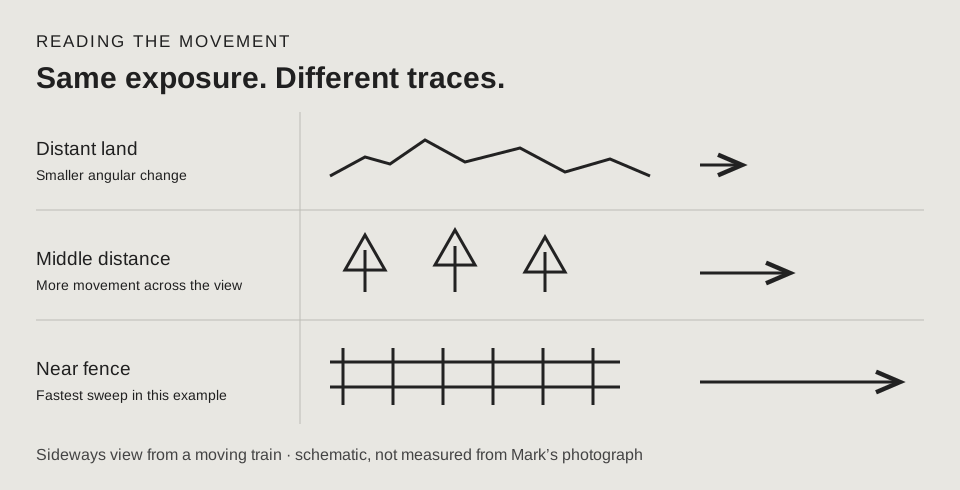
From a moving train, nearby objects generally cross the view faster than distant ones. During a longer exposure, a close fence can become a streak while a distant ridge remains more legible. Direction of view, train speed, vibration and camera movement all affect the result.
The shutter speed, aperture and ISO have not been supplied for this frame. The photograph supports looking at the different kinds of blur; it does not establish an exact recipe for repeating them.
Watch, then try
Take Better Photos Episode 2 - Shutter Speeds

Pause on the movement examples. Choose whether your own passing subject should freeze or smear before you choose the shutter speed.
Window, lens and spectacles
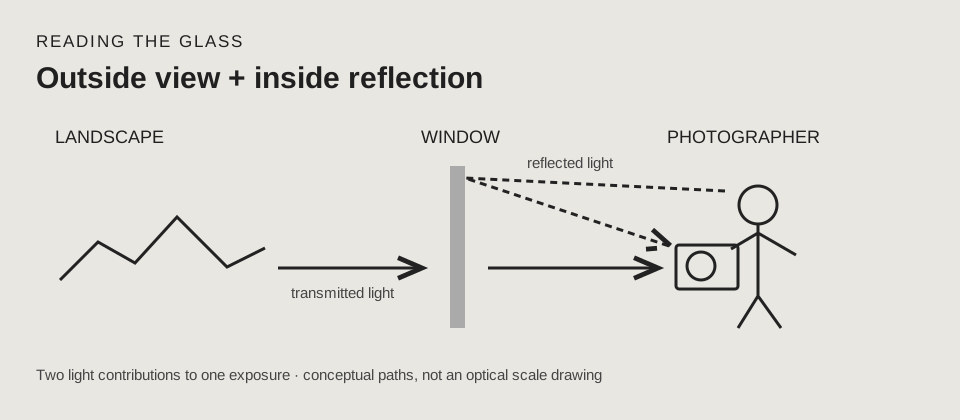
The window admits light from the landscape and reflects some from the carriage. Here the hands and camera appear over the outside view. Their relative stillness makes a contrast with the passing foreground.
Mark specifically points out his glasses over the eyes. Window glass, the camera lens and spectacles have different roles: the pane transmits and reflects, the lens forms the recorded image, and the spectacles belong to his own looking. The reflected eyes and camera make that act visible in the photograph.
What Mark found in it
Childhood and the fading dream are Mark’s associations with the image. The broad clouds remain recognisable while nearer boundaries merge and the reflected figure is incomplete. That mixture of clear and indistinct passages gives his account a visible starting point.
The picture can be looked at as a landscape and returned to as a self-portrait. The slow shutter test brought the two together. There is no need to choose one reading before noticing the other.
Watch, then try
Take Better Photos Episode 7 - Composition

Look for relationships between elements rather than a grid to obey. Pause on a frame and name what changes if one object touches the edge.
Sources & further looking
Facts checked 30 October 2026. The practical exercises and critical readings are this publication’s editorial interpretation.